*This is a collaborative post.
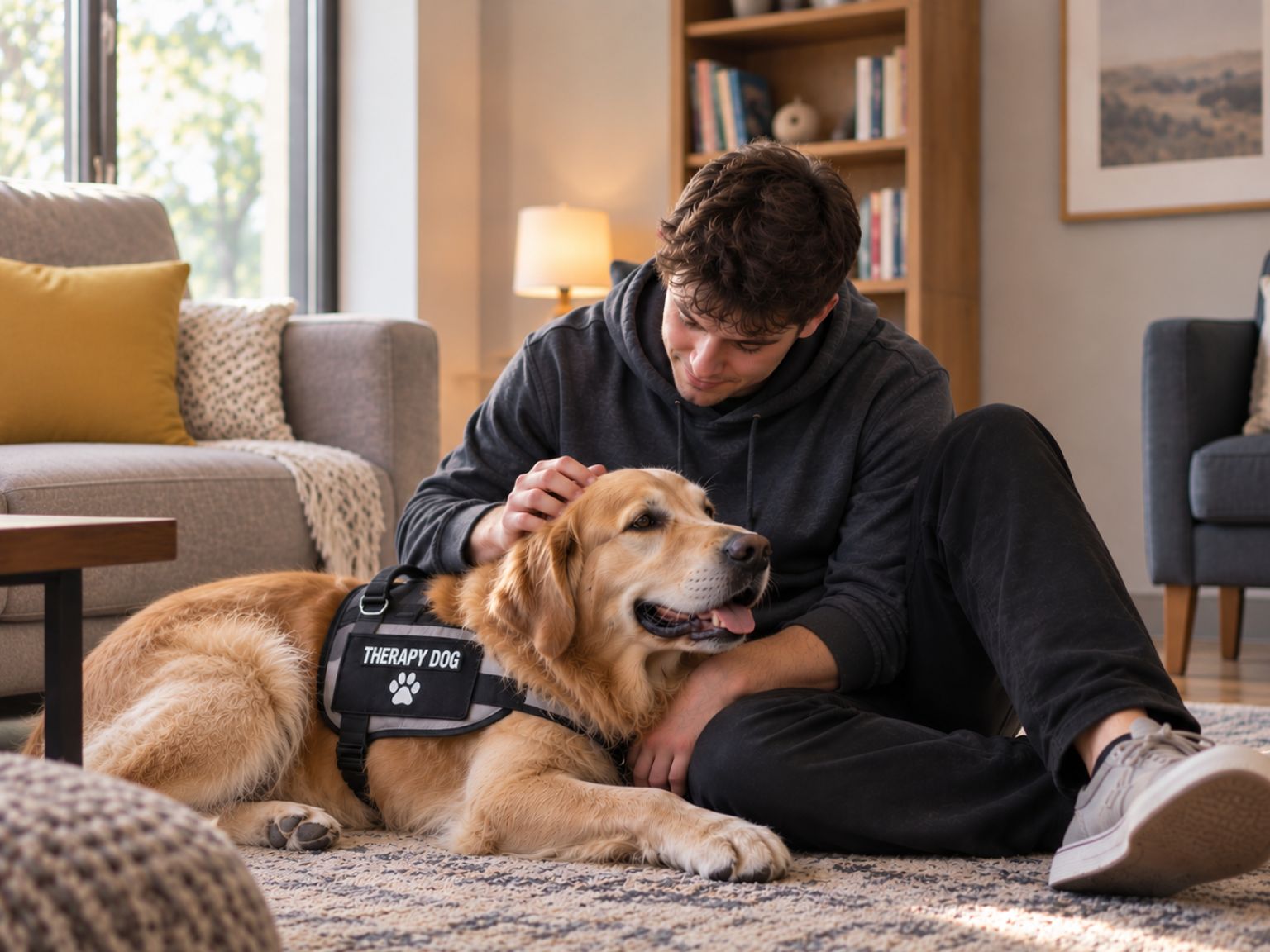
The first time Daniel said anything real in treatment, weeks into his stay, he wasn’t talking to a counselor. He was sitting on the floor of the common room with the facility’s therapy dog’s head in his lap, telling her, out loud, why he’d actually started using in the first place. Nobody had asked him to. He just found himself talking, the way people sometimes do around an animal that isn’t going to react, interrupt, or quietly judge, in a way he genuinely hadn’t managed to do across three separate individual sessions with an actual therapist.
That’s not a fluke, and it’s not just a nice touch for the brochure or a feel-good photo on a website. There’s a real, if still developing, body of research behind why an animal in the room changes what happens in treatment.
Why an Animal Changes the Room
Talking about addiction means talking about shame, failure, and things most people have spent years avoiding saying out loud. A dog doesn’t ask follow-up questions or register disappointment on its face. That absence of judgment turns out to matter more than it sounds like it should, lowering the emotional stakes of a conversation enough that people say things to an animal they weren’t ready to say to a person yet.
There’s also something physical happening underneath the emotional part. Interacting with an animal, petting it, sitting near it, simply having it in the room, tends to lower physiological stress markers in ways people can feel even when they can’t quite explain why. That lowered baseline stress is exactly the state in which someone is more able to tolerate a hard conversation instead of shutting down or deflecting the moment it gets uncomfortable, which is often the precise moment real therapeutic work has a chance to happen.
This isn’t limited to dogs specifically. Researchers studying animal-assisted therapy across different species, dogs, horses, even sheep in one recent pilot study, keep finding the same underlying mechanism at work: the presence of a non-judgmental animal lowers defensiveness and increases willingness to stay engaged with treatment, even when the treatment itself hasn’t changed at all.
What the Research Actually Shows
Treatment completion is one of the hardest problems in addiction care, and it’s exactly where animal-assisted approaches have shown some of their more interesting results. A naturalistic study published in Addiction Science and Clinical Practice followed 108 young adults with substance use disorders at a Norwegian addiction treatment hospital over an eighteen-month period and found that patients who participated in horse-assisted therapy alongside standard treatment had higher rates of both retention and completion than those who didn’t.
A follow-up randomized controlled trial from the same research group tested this more rigorously with 37 patients randomly assigned to either horse-assisted therapy or standard treatment alone. The difference wasn’t large enough to reach statistical significance in a sample that size, and the researchers ran into real-world complications along the way, participants transferring to other programs, uneven attendance at sessions. But the direction held anyway: 44% of the group with horse-assisted therapy completed treatment, compared to 32% in the standard-treatment-only group. The researchers were straightforward about the limits of a small, imperfect sample, and just as clear that the pattern was worth testing further in a larger study rather than dismissing outright.
Separate research on residential programs treating co-occurring substance use and mental health conditions has tested structured animal-assisted therapy sessions directly, finding it a feasible and well-received addition to standard care, particularly for patients who struggle to engage with more traditional talk-based approaches early in treatment, before enough trust has built up to make that kind of direct conversation feel safe.
What This Actually Looks Like Day to Day
None of this requires an elaborate program to matter. Some of the clearest benefits show up in small, repeatable ways:
- A calmer, gentler entry point into a conversation someone wasn’t ready to start cold
- A predictable, safe, steady presence on days when everything else in treatment feels overwhelming
- A nonverbal way to practice trust and connection before doing it with people
- A reason to leave a room and be somewhere else for a few minutes, which matters more than it sounds
- Something to genuinely care for and be responsible for, in a period when someone’s relationship with responsibility is often shaky
None of it replaces therapy, and nobody running these programs would claim otherwise. It tends to make people more willing to actually show up for it.
Where This Fits Into Choosing a Program
A recovery program that treats something like a therapy dog as a genuine part of care, not a marketing photo, is usually signaling something bigger about how it thinks about engagement: that connection has to happen before change can, and sometimes an animal is what opens that door first, long before a person is ready to open it with another human being in the room.
Daniel kept talking to the dog most days after that, but he also kept showing up to sessions with his actual therapist, which he hadn’t been doing much of before. The two weren’t really separate, whatever it might have looked like from the outside looking in. One just made the other possible, in a way three weeks of scheduled appointments alone hadn’t managed to.
Sources
Gatti, F., Walderhaug, E., Kern-Godal, A., Lysell, J., & Arnevik, E. A. (2020). Complementary horse-assisted therapy for substance use disorders: a randomized controlled trial. Addiction Science & Clinical Practice, 15, 7. https://doi.org/10.1186/s13722-020-0183-z
Kern-Godal, A., Arnevik, E. A., Walderhaug, E., & Ravndal, E. (2015). Substance use disorder treatment retention and completion: a prospective study of horse-assisted therapy (HAT) for young adults. Addiction Science & Clinical Practice, 10, 21. https://doi.org/10.1186/s13722-015-0043-4