
*This is a collaborative post.
A garden that looks lovely in a photo and a garden that survives a family using it every day are rarely the same thing. The version with the immaculate lawn and the pale furniture tends not to account for a football, a dog and three children who have just discovered the hosepipe. A better place to start than any look is a plain question: what does this space actually need to do, for the people who’ll be in it most?
Work out how it really gets used
Most family gardens are asked to do several jobs at once. Somewhere for children to run about, somewhere for adults to sit with a coffee, room for the washing line, a spot for the bins, and often a dog with opinions of its own. Those demands pull against each other, and they shift as children grow, so the layout that suits a toddler and a paddling pool won’t be the one a ten-year-old wants for a goal and a trampoline.
Splitting the garden loosely by use tends to work better than one open expanse. A seating area near the house lets you keep half an eye on younger ones while the kettle’s on, with the noisier play pushed further down where stray footballs are less of a threat to the patio doors.
Choosing surfaces that put up with children and pets
This is where the look and the practicality often part ways. Lawn is soft and cheap to keep but turns to mud under constant little feet and a dog’s favourite route. Artificial grass skips the mowing and copes with heavy use, though it still needs a prepared base, doesn’t drain on its own and can get hot in full sun. Paving is hard-wearing and easy to sweep but wants proper drainage and can be slippery near a door in the wet.
Decking suits a raised or sloping spot but gets greasy through a damp winter and needs upkeep. Gravel drains well and fills awkward corners, but it travels indoors on small shoes and isn’t much fun for bare feet or a buggy. None of them is genuinely maintenance-free, whatever the label promises, and the right answer usually depends on which child-and-pet combination is using it.
Sorting the ground and the materials
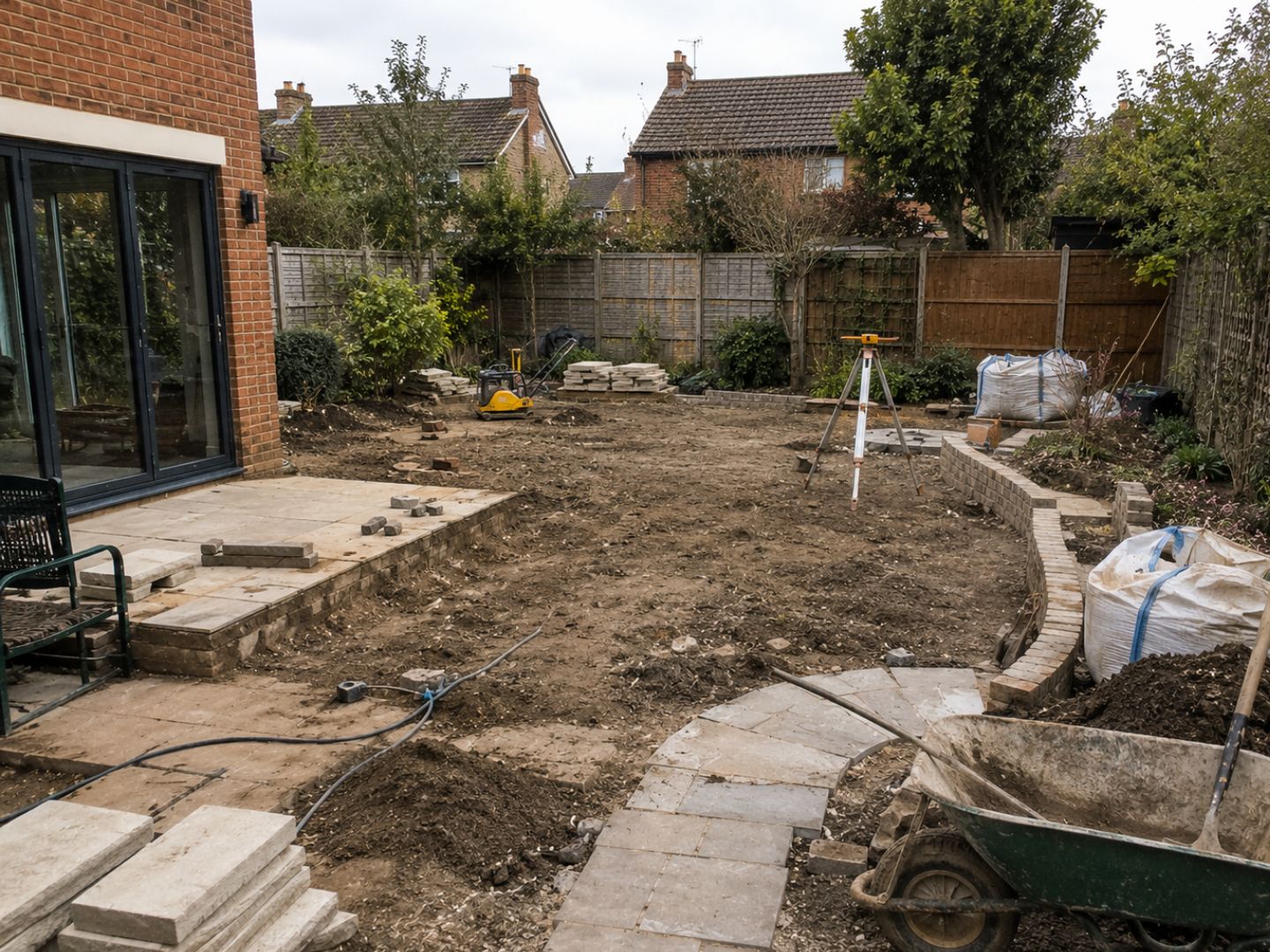
Whatever goes on top, the part that decides whether it lasts is underneath, and it’s the bit nobody photographs. A surface laid on poorly prepared ground sinks and lifts within a couple of seasons, so a properly compacted sub-base matters, and decorative aggregate is not the same thing as sub-base however alike they look. Falls and drainage need thinking about so water runs away from the house rather than pooling, and edging keeps everything from wandering across the garden over time.
Once the plan and the measurements are settled, it’s far easier to price up the whole job in one go rather than discovering gaps halfway through a dug-up garden. A merchant carrying building and landscaping materials can usually cover the visible surface alongside the sub-base, edging, fixings and any timber or fencing, which keeps the easily forgotten bits from becoming a frustrating extra trip. Work the quantities out from actual measurements, allow a little over for waste, and before digging any holes, check for underground services so a spade doesn’t find a cable or pipe.
Safety without turning the garden into a playground
A family garden can be safe without looking like a soft-play centre. For younger children and dogs, a secure boundary does most of the work, so it’s worth checking which fence is actually yours before altering anything, and not fixing to a neighbour’s fence without agreement. In an exposed, windy spot, solid panels take a real battering, and gravel boards along the bottom keep timber out of the wet. Around any climbing frame or trampoline, a softer landing surface is sensible, but the rest of the garden doesn’t need to follow suit. Children tend to enjoy a garden that feels like a garden more than one paved over and colour-coded for safety.
Doing it in stages
There’s no rule that says it all has to happen at once, and on a family budget it usually can’t. Phasing the work across seasons lets you spread the cost and tackle the groundwork before the planting. Plenty of the prep is within reach for a capable DIYer with a hand to help, though anything structural, a retaining wall holding back a slope in particular, is worth handing to a professional rather than improvising. A proper plan is what lets you stop when the money or the energy runs out and pick up later without redoing what you’ve already done.
Plan around how the family actually lives in the space, and the garden tends to look after itself far better than one designed purely to look the part.




My children took over the whole garden when they were little with the trampoline, climbing frame, swing etc!
I feel an area just for play is essential for a family friendly garden
I really like the idea of a garden that’s both beautiful and functional. A garden that’s suitable for play and leisure.
Garden transformations can take such a long time, it’s important to set realistic expectations for yourself, I agree doing it in stages. Ours took years!
It’s always nice to have a garden that’s practical, beautiful and has somewhere to play for the kids.