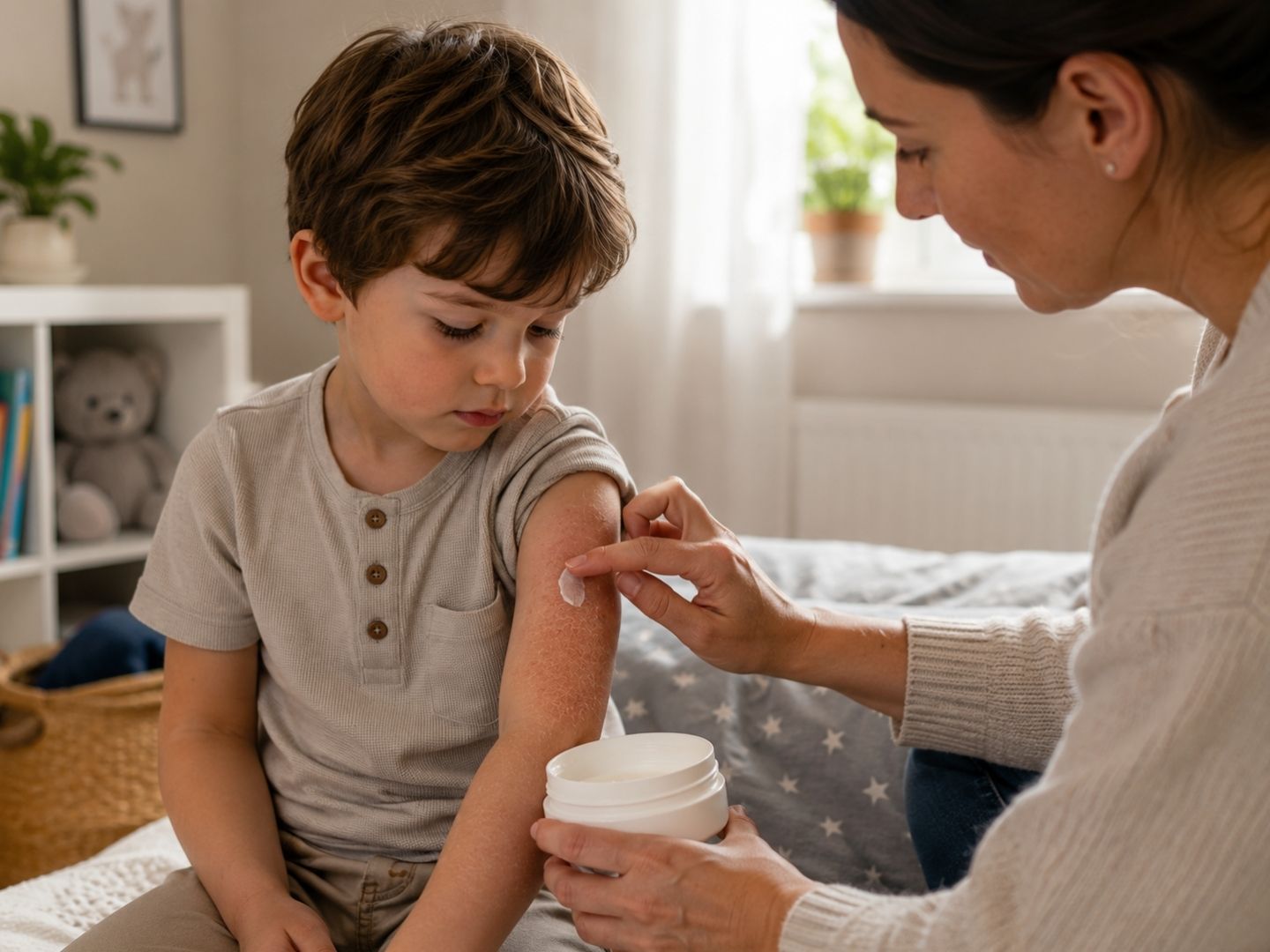
*This is a collaborative post.
Parenting a child with eczema comes with unique challenges, but it is entirely possible to help your child stay comfortable while reducing the frequency and severity of flare-ups. My eldest suffered from eczema as a young child, so I know first-hand how upsetting those itchy, uncomfortable flare-ups can be for both children and parents. Eczema, also known as atopic dermatitis, is a chronic condition that causes dry, itchy, and inflamed skin. Although there is no cure, establishing healthy daily habits can make a significant difference in your child’s quality of life.
Every child experiences eczema differently, so finding the right combination of skincare, clothing, and environmental adjustments may take some trial and error. With consistency and patience, you can create a routine that protects your child’s skin and helps them thrive.
Build a Consistent Skincare Routine
One of the most effective ways to manage eczema is to keep the skin well moisturised. Dry skin weakens the skin barrier, making it easier for irritants and allergens to trigger flare-ups. Apply a fragrance-free moisturiser several times throughout the day, particularly after bathing. The best time to moisturise is within a few minutes of gently patting the skin dry, helping to lock in moisture.
Follow your healthcare provider’s advice regarding medicated creams or ointments if your child experiences more severe symptoms. Using prescribed treatments correctly can help calm inflammation before it worsens.
Bathe Carefully
Bath time should soothe the skin rather than irritate it. Use lukewarm water, as excessive heat can strip away natural oils and increase dryness. Baths should generally last around 10 minutes, followed by gentle drying with a soft towel.
Choose mild, fragrance-free cleansers designed for sensitive skin and avoid products containing harsh soaps or strong perfumes. When my eldest struggled with eczema, we found adding Oilatum to his bath helped soothe his skin, while moisturisers such as Dermol, Diprobase, and Aveeno were all gentle, effective options for keeping his skin hydrated. These steps are commonly recommended as part of eczema care routines.
Identify Common Triggers
Many children have specific triggers that make their eczema worse. While these vary from child to child, some of the most common include:
- Sweating and overheating
- Fragranced soaps, detergents, and skincare products
- Dust mites and pollen
- Dry indoor air
- Certain fabrics
- Emotional stress
Keeping a simple diary of flare-ups may help you identify patterns. Once you know your child’s triggers, it becomes much easier to avoid or minimise them.
Dress Your Child for Comfort
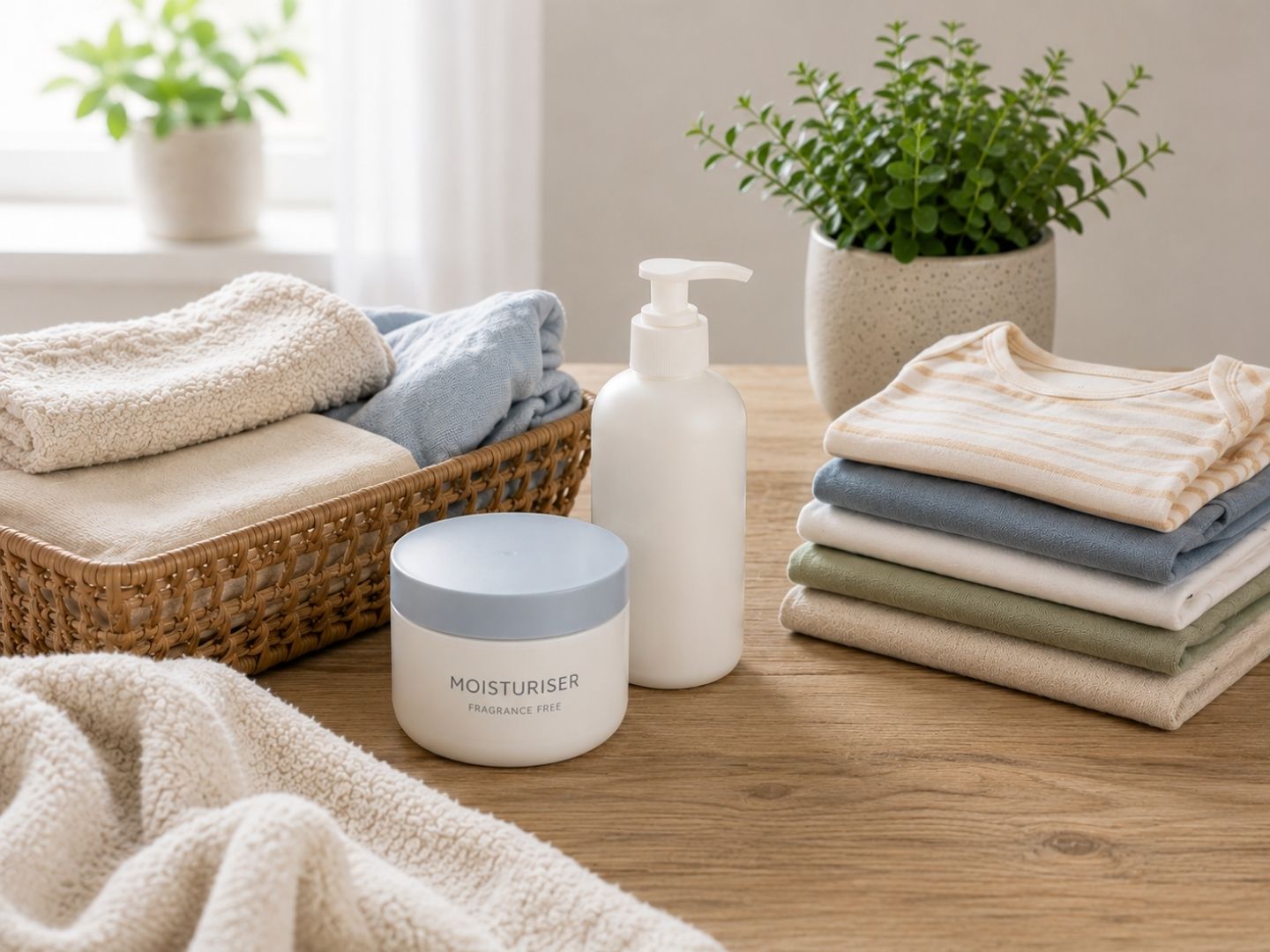
Clothing plays a much bigger role than many parents realise. Rough fabrics, irritating seams, and overheating can all contribute to itchy skin and discomfort. Soft, breathable materials such as 100% cotton are generally recommended because they allow the skin to breathe while reducing friction.
Choosing specialised eczema-friendly clothing for children can make everyday life more comfortable by reducing irritation and helping to maintain a stable skin temperature. When shopping for clothes, look for garments that are:
- Soft and breathable
- Free from rough seams or irritating labels
- Comfortable without being overly tight
- Easy to layer so your child does not overheat
Always wash new clothing before your child wears it to remove any manufacturing residues that could irritate sensitive skin. Fragrance-free, dye-free laundry detergents are also recommended.
Encourage Gentle Habits
Children naturally scratch itchy skin, but scratching can damage the skin barrier and increase the risk of infection. Keeping fingernails short and clean can reduce skin damage when scratching does occur. For younger children, distraction techniques, soft toys, or cool compresses can help redirect attention away from itching. Older children can gradually learn to recognise early signs of itching and use moisturiser or other soothing methods instead of scratching.
Create a Skin-Friendly Home Environment
Your home can either support healthy skin or unintentionally contribute to flare-ups. Keeping rooms comfortably cool can reduce sweating, while maintaining moderate humidity may help prevent excessive dryness. Regular vacuuming and washing bedding can reduce exposure to dust mites, which are common eczema triggers for some children. Choosing fragrance-free household products can also minimise unnecessary skin irritation.
Over time, you’ll become familiar with what works best for your child’s unique skin. Those everyday habits often become the foundation for long-term eczema management, giving your child the confidence and comfort they need to grow and thrive.





All 3 of my boys have had pretty severe eczema their whole lives and since two of them mostly get flare ups on their hands it has not been easy to control. I’m glad they are adults now and can take over their own care but we really never found a great solution for any of them despite buying all the fragrance free, dye free soaps and detergents and lotions we could.