*This is a collaborative guest post.
Lots of us enjoy a good book, just like most of us can’t resist a bargain. If you love books and storytelling, chances are your collection is ever-growing. And, while digital will continue to have its place, nearly half of us enjoy a printed book.
If yours is a typical household your bookshelves probably look less like a curated display and more like the bargain bin at the local flea market. Picture books stacked haphazardly, novels crammed in willy-nilly, and the odd toy acting as bookend. It makes browsing titles for a favourite read quite frustrating as well as looking messy.
Done right, your personal library makes your home feel cosy, welcoming, calming and functional. It doesn’t take expert knowledge of the Dewey decimal system either.
Start With a Cull
Before you can organise, you need to decide what deserves shelf space. Go through your books honestly. Which ones have you read and might read again? Which ones do your children enjoy? Be ruthless about books that are damaged, unloved, or simply don’t appeal anymore.
The ones gathering dust because they’re never touched and you don’t like, you should let go. You could sell them or donate them to charity shops if they’re in good condition, and either recycle or up-cycle if they’re damaged.
By removing books you don’t value, you free up space and create room for those you love. It makes your shelves feel instantly more organised and inviting.
Consider What’s Taking Up Space
Be honest about whether every book on your shelf that you love really belongs in your living space. Hobby books when you’re not engaging with the hobby, reference manuals you rarely consult, or books you’ve inherited that previous generations loved, might be better off kept elsewhere so there’s room for the more personal collection. So think about:
- Large collections you want to keep but don’t need daily access to.
- Books inherited from relatives that hold sentimental value but aren’t part of your active library.
- Children’s books from earlier stages that younger siblings might enjoy in a few years.
- Professional or academic books you’ve finished but want to retain.
Renting a self storage unit can help solve this problem, keeping precious but unused books safe from damage. No light to fade the covers, no pests to chew the paper, and no danger of little children using them as colouring books. Just well-preserved heirloom or sentimental books you can revisit whenever you like.
Devise a System
Organising by genre is popular: put the fiction together, the children’s books in their own section, separate cookbooks, biographies, reference books, and so on. Not only does this make it easier to find what you’re after, it creates visual coherence on your shelves.
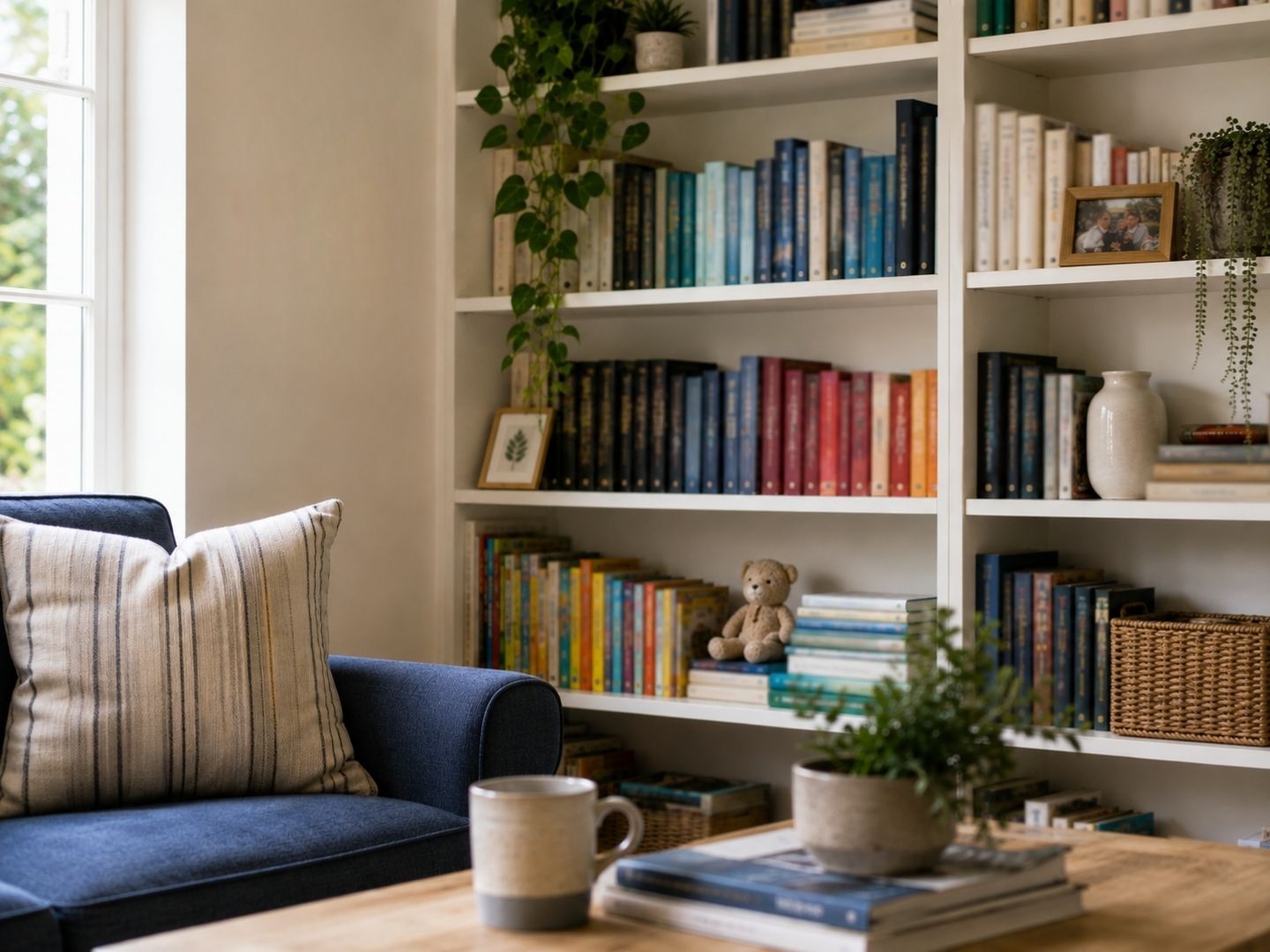
But you don’t have to be so strict if that doesn’t appeal, or doesn’t fit your aesthetic. Colour-coding appeals to many people as it creates a rainbow effect that’s pleasing to look at. Or you could organise by author, like in a library, or by size or type (paperback or hardback).
There’s no universally “correct” system. The best one is the one that works for you, that your family will actually use and enjoy. If you have young children, involve them in the organising. Let them choose where their things go. It’s easier to get them to put books back when they understand where to put them.

Create Zones for Different Readers
When you family has diverse reading interests, it make sense to have distinct zones. Again, there are various ways to do this.
You could put all the picture books together for your youngest. Keep one area just for your personal books, have another zone for the teen’s reading, and a special zone for school or reference books.
Having zones helps prevent a jumbled mess so everyone can find the book they need and, importantly, put it back in the right place when they’re done with it.
Save the lower shelves for the youngest children’s books so they can browse on their own and reach titles without climbing. It helps build confidence and engagement in selecting and enjoying books.
Use Vertical and Horizontal Space
Stacking some books horizontally, particularly oversized picture books or coffee table books, breaks up the monotony of having all the spines facing out in a row. However, random stacking looks chaotic so give it some thought. You could, perhaps, stack all your children’s picture books together, or keep your art and design books displayed this way.
Decorative bookends are a great way to keep the vertical sections upright and prevent books falling over when shelves aren’t totally full.
Make Maintenance a Habit
In a book-loving household, especially in areas like Bedford which are rich in charity shops for instance, looking for self storage in Bedford is a good idea. Local storage gives you somewhere to keep your best titles while still having space for new acquisitions. A regular sort and shuffle keeps everything organised and neat.
Involve the children. Looking after their books helps them learn respect for their possessions and for shared spaces. They can also learn to make decisions by choosing which old books to move off the bookshelf to make room for new ones.
Neat bookshelves transform a room. They make your home feel more organised, reduce visual clutter, and make reading even more of a pleasure.