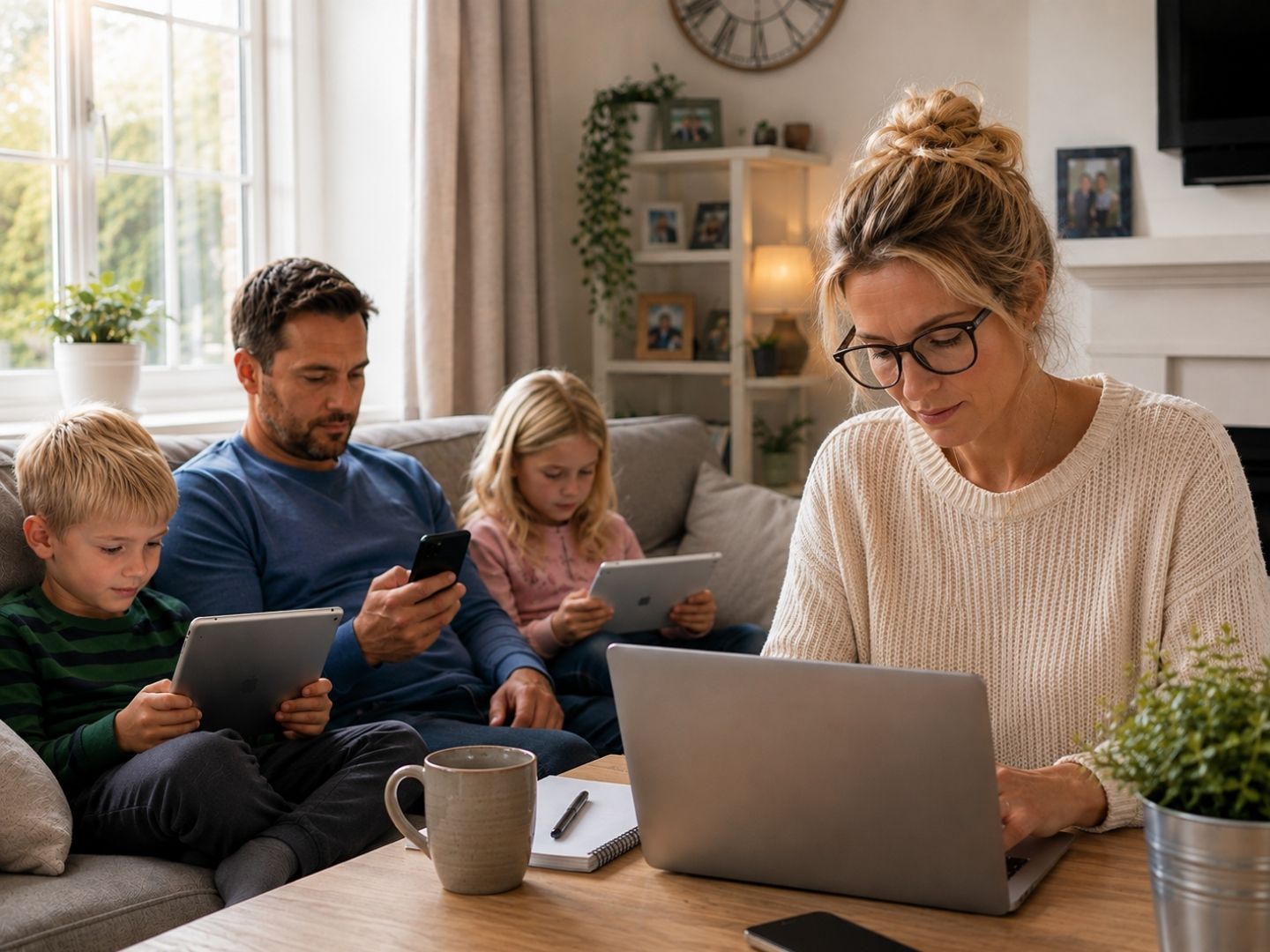
If someone had told me ten years ago that my whole family would spend this much time staring at screens, I would not have believed them. Between the kids’ tablets, my laptop for work, and everyone’s phones buzzing away on the kitchen counter, screens have quietly become part of almost everything we do. Homework, cartoons, video calls with grandparents, even the shopping list lives on a screen now. It is easy to accept this as normal family life and not think much more about it. But screens do have an effect on our eyes, and it is worth understanding what that looks like for both kids and adults in the house.
What screen time actually does to young eyes
Children’s eyes are still developing, and a lot of eye specialists have noticed a rise in short sightedness in kids who spend long stretches focusing on close-up screens rather than looking at things further away. When a child stares at a tablet for hours, they blink less often, and that can leave their eyes feeling dry, tired, or a bit gritty by the end of the day. Some children rub their eyes a lot, get headaches after school, or sit unusually close to the television without anyone quite noticing why. It is not that a bit of screen time is dangerous, but the pattern of endless close focus without breaks is what tends to cause the trouble.
One thing that helped in our house was simply building in more outdoor time between screen sessions. Kicking a ball around the garden or walking to the park gives young eyes a chance to focus on things far away, which seems to balance out all that close up screen work. It sounds almost too simple, but opticians often mention it as one of the easiest habits to build early.
It is not just the kids
I used to assume eye strain was something that happened to children glued to games consoles, until I noticed my own eyes stinging by mid afternoon most days. Between emails, video calls, and scrolling on my phone during the two minutes I get to myself, my eyes are on a screen for a huge chunk of the day. Adults get digital eye strain too, and the symptoms are similar across the board: dryness, blurry vision that comes and goes, headaches, and that heavy, tired feeling behind the eyes after a long day of typing.
For parents who wear contact lenses, screens can be a bit more of a nuisance. Staring at a screen reduces how often you blink, and that can make lenses feel drier and less comfortable than usual, especially by the evening. If you already notice your eyes feeling scratchy after a day of work calls, it is worth having a chat with your optician about lens options that are designed to stay comfortable through long wear, and if you are due a change, you can shop biofinity contact lenses through Vision Direct, since they are often recommended for people who spend a lot of their day in front of a screen.

Small habits that make a real difference
None of this means banning screens altogether, which frankly would not survive five minutes in most households anyway. It is more about building small habits that give everyone’s eyes a break. The 20-20-20 rule is one that opticians mention again and again: every 20 minutes, look at something roughly 20 feet away for at least 20 seconds. It is easy enough to remind the kids about during homework time, and honestly, it is a good nudge for adults working from home too.
Lighting matters more than people think as well. A screen that is far brighter than the room around it forces your eyes to work harder, so dimming the screen slightly or adding a lamp nearby can ease the strain without anyone noticing a difference in what they are watching or working on. Encouraging everyone to blink more often sounds almost silly to say out loud, but it genuinely helps keep the surface of the eye from drying out during long screen sessions.
Evenings are another area worth a rethink. Cutting down on screens for half an hour before bed, whether that is a child’s tablet or a parent’s phone, tends to help both sleep and eye comfort, since the eyes get a proper rest before the day ends rather than going straight from bright screen to pillow.
Keeping an eye on the whole family
Regular eye tests are worth keeping on the calendar for everyone in the house, not just the kids. Children’s eyesight can change quickly as they grow, and adults often do not notice gradual changes until reading a menu in dim lighting suddenly feels like a challenge. An optician can also flag whether screen habits are contributing to any strain and suggest simple adjustments, whether that is a lens change, glasses with a slight prescription for close work, or just a reminder to take more breaks.
Screens are not going anywhere, and there is no need to feel guilty about how much they have worked their way into family life. Understanding how they affect everyone’s eyes, from toddlers glued to cartoons to parents stuck on video calls, makes it much easier to build small habits that protect everyone’s eyesight without turning it into a daily battle over screen time.





Thanks for sharing. This has actually been an issue for me this week. I’ve had such blurry vision.
I’ve been researching a lot and had too much screen time, with a fan blowing directly in my face because we’re in another heatwave and the AC is still out of order. So my eyes have been suffering a bit.
I do try to look out the window, we have gorgeous views, but when I’m in the middle of something, in the flow of it, I do forget to take breaks. It is so important to take care of our eyes.